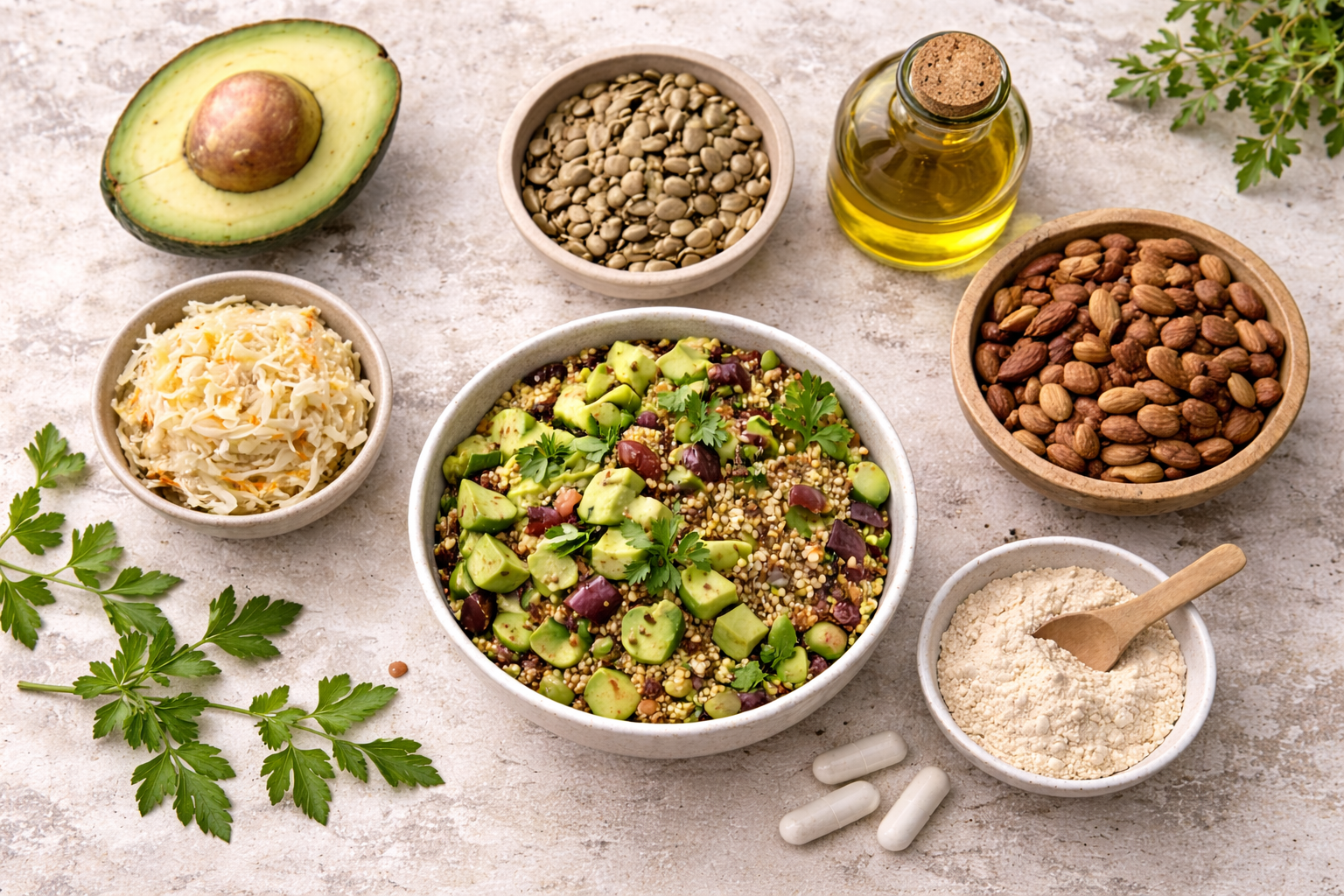
The gut lining plays a vital role in overall wellbeing. A healthy intestinal barrier allows beneficial nutrients to pass through while helping keep unwanted substances out. Understanding how nutrition, lifestyle, and functional ingredients support this barrier is an important part of modern health optimisation.
Introduction
The intestinal barrier is a highly specialised interface between the external environment and the internal systems of the body. Recent research, including a 2023 scientific review, highlights how specific nutrients and functional ingredients can support barrier integrity.
For health professionals focused on optimisation rather than disease management, understanding the intestinal barrier, its biomarkers, and supportive strategies provides valuable insight into overall resilience and wellbeing.
Understanding the Intestinal Barrier
The intestinal barrier consists of epithelial cells joined together by specialised structures known as tight junctions. These regulate what passes from the gut into circulation.
In a balanced state, this barrier allows efficient absorption of nutrients while helping limit the passage of potentially unwanted molecules. When resilience is reduced, permeability may increase, allowing larger molecules or microbial components to cross more freely.
From a functional health perspective, maintaining or optimising barrier integrity supports long-term balance rather than addressing pathology.
Key Biomarkers & Why They Matter
Although not used for diagnosis, certain functional biomarkers can offer insight into intestinal barrier status and related systems:
- Zonulin – A protein involved in regulating tight junctions; higher levels may reflect increased permeability.
- Microbiome diversity and composition – A balanced microbiota supports barrier function and short-chain fatty acid production.
- Inflammation and endotoxin-related markers – Non-specific indicators that the barrier may be under increased functional load.
- Functional nutrient status – Vitamins A and D, glutamine, omega-3 fatty acids, and polyphenols contribute to epithelial health.
Combining biomarker data with dietary and lifestyle assessment allows practitioners to build a more complete picture of where optimisation may be beneficial.
Practical Strategies to Support Barrier Health
- Microbiome-friendly nutrition – A varied diet rich in fibre and fermented foods supports microbial diversity and epithelial nourishment.
- Targeted functional ingredients – Glutamine, polyphenols, omega-3 fatty acids, and vitamins A and D have all been shown to support barrier integrity.
- Lifestyle optimisation – Sleep quality, stress management, moderated alcohol intake, and mindful antibiotic use help preserve barrier resilience.
- Ongoing monitoring – Functional testing allows personalised refinement of nutrition and lifestyle strategies over time.
Application for Practitioners
A functional approach to intestinal barrier optimisation may include baseline testing, dietary and lifestyle review, targeted nutritional support, and follow-up assessment after a defined interval.
This iterative process allows practitioners to personalise recommendations and track functional shifts rather than relying on a one-size-fits-all approach.
Summary
The intestinal barrier is a foundational element of overall functional health. Supporting its integrity through nutrition, targeted ingredients, and lifestyle optimisation helps promote resilience and long-term wellbeing.
Testing through Nordic Laboratories enables a data-informed, personalised approach to supporting intestinal barrier health within a preventive and health-optimisation framework.
Would you like to sign up with us as a practitioner?
References
- Aleman RS, Moncada M, Aryana KJ. Leaky Gut and the Ingredients That Help Treat It: A Review. Molecules. 2023;28(2):619.
Discover more

Nutritional dark matter: the richness of food beyond the label
An apple is more than its sugar content. A handful of nuts offers more than fat and protein. And the herbs scattered over dinner bring more to the table than flavour.
View Detail

When stress reaches your gut
Stress can influence the gut environment, while signals from the gut help shape how the body responds to stress. Understanding this connection gives us more ways to support resilience, through what we eat, how we rest, and the pauses we build into our day.
View Detail

Hydration: Supporting Focus, Energy and Cognitive Performance
Nutrition, sleep and physical activity are well-established foundations for cognitive performance. But there is another simple factor that is easy to overlook: hydration.
View Detail