
An apple is more than its sugar content. A handful of nuts offers more than fat and protein. And the herbs scattered over dinner bring more to the table than flavour.
View Detail

When stress reaches your gut
Stress can influence the gut environment, while signals from the gut help shape how the body responds to stress. Understanding this connection gives us more ways to support resilience, through what we eat, how we rest, and the pauses we build into our day.
View Detail

Hydration: Supporting Focus, Energy and Cognitive Performance
Nutrition, sleep and physical activity are well-established foundations for cognitive performance. But there is another simple factor that is easy to overlook: hydration.
View Detail

Soleus Push-Ups or Walking After Meals?
Most people know that regular movement supports healthy glucose regulation. However, a study from the University of Houston attracted considerable attention by suggesting that activating one small muscle in the calf could substantially influence the body’s response to glucose, even while sitting. The muscle is called the soleus.
View Detail

Multivitamins: Supporting Healthy Ageing through nutrient sufficiency
Healthy ageing is increasingly understood as a reflection of how well our biological systems maintain balance over time. While chronological age simply measures the number of years lived, biological age reflects how our cells, tissues, and metabolic systems are functioning.
View Detail
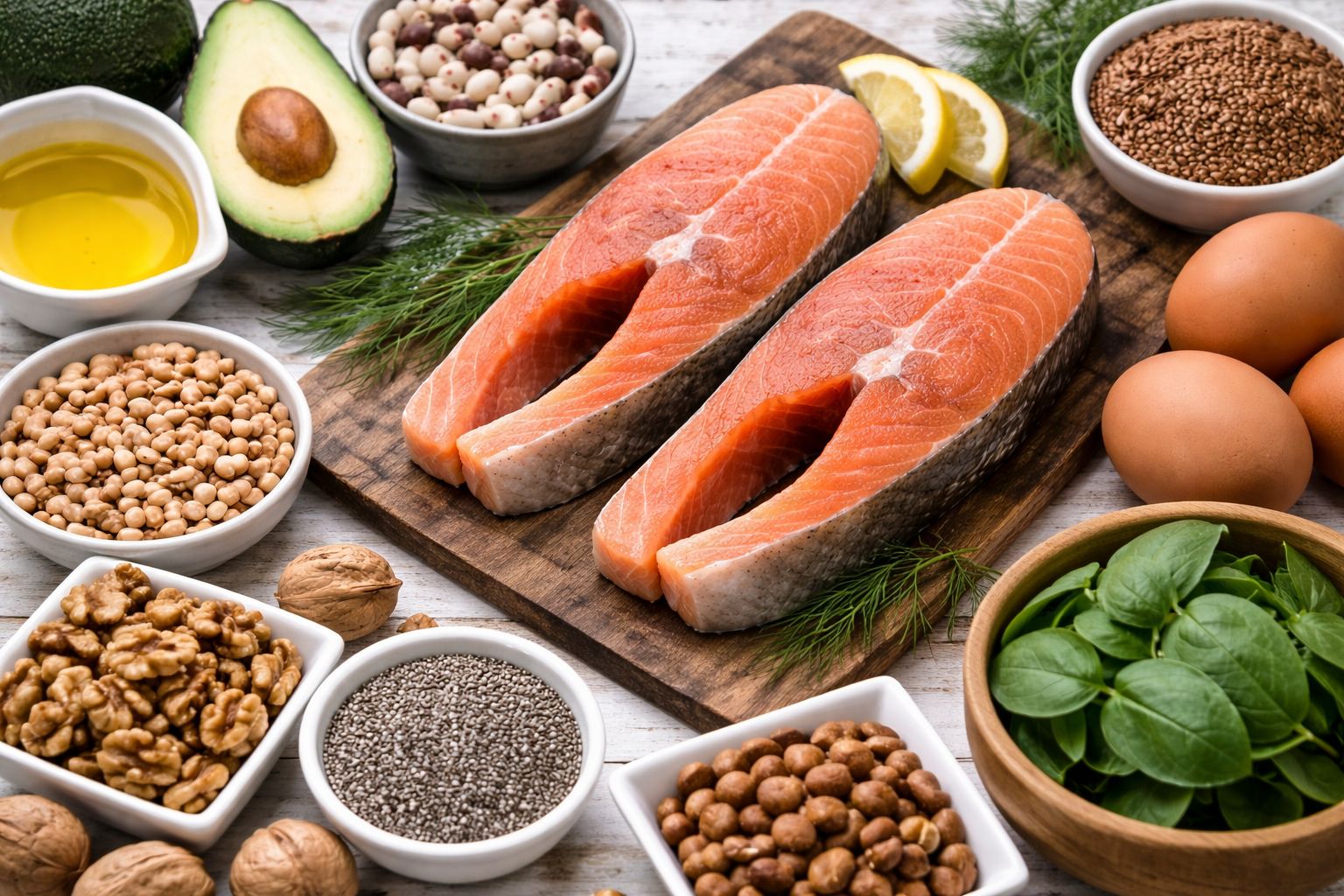
Omega-3 Fatty Acids and Human Health: What the Latest Research Reveals
Omega-3 fatty acids are essential nutrients that play a central role in maintaining healthy cellular function, particularly within the brain and nervous system. Among these, EPA (eicosapentaenoic acid) and DHA (docosahexaenoic acid) are key structural and functional components of neuronal membranes, supporting communication between cells and overall brain physiology.
View Detail

The Health Benefits of Having a Dog: Microbiome, Mood & Movement
Discover how having a dog naturally supports microbiome diversity, mental wellbeing, and daily physical activity, backed by research and aligned with a health-optimisation lifestyle.
View Detail

Coffee, Cortisol Rhythms & Genetic Metabolism: A Scientific Overview
Coffee contains more than 1,000 bioactive compounds, including caffeine, trigonelline, diterpenes, melanoidins, and various polyphenols. These compounds influence alertness, metabolic activity, vascular tone, and antioxidant capacity. Increasing evidence suggests that both timing of consumption and genetic variability in caffeine metabolism shape the overall physiological response.
View Detail

Optimising Your Intestinal Barrier: How Functional Ingredients Support a Healthy Gut
Precision testing for health optimisation – Delivering trusted functional and genetic testing to health professionals and their patients worldwide.
View Detail

Immuno-Metabolism: Energy, Balance and the Future of Immune Health
The immune system doesn’t just fight infections—it also manages energy. Recent Nobel Prize-winning research and systems-immunology insights reveal that healthy immunity depends on how efficiently our cells balance metabolism and defence.
View Detail

Supporting Optimal Hormone Health Through Genetics and Metabolism
Hormones influence energy, mood, sleep, reproduction, and resilience to everyday stress. Their impact is shaped not only by the amount of hormone present, but also by how the body naturally transforms and clears these compounds. Both lifestyle and individual genetic differences play a role in this balance.
View Detail

Exploring Gut Health from Two Perspectives: DNA Gut and GI-MAP with Zonulin
Gut health plays a central role in overall well-being. It supports digestion, nutrient absorption, energy, immune balance, and even communication with the brain.
View Detail

Gut Health in Children and the Importance of the First 1000 Days
The first 1000 days of life – from conception through the second birthday – represent one of the most critical windows for lifelong health. During this period, a child’s gut flora is rapidly established, shaping digestion, nutrient absorption, and, most importantly, immune system development.
View Detail

Using Genetic Insights as a Foundation for Personalised Health Strategies
Genetic testing has become an invaluable tool in functional medicine and personalised health. With platforms like dnalife®, practitioners gain a window into how an individual’s biology may respond to nutrition, lifestyle, and environmental inputs. These insights do not predict disease, but they help create strategies that align with each person’s unique biology.
View Detail

Vitamin D and Longevity: A Nutrient That Touches the Hallmarks of Aging
Vitamin D is often described as the “sunshine vitamin,” yet its role extends far beyond bones and calcium balance. New research positions vitamin D as a potential longevity factor, influencing multiple cellular processes that underpin healthy aging.
View Detail

The 12 Hallmarks of Ageing: A Functional Medicine Perspective on Longevity
Over the past decade, scientists have identified key biological “hallmarks of ageing”, the core processes that drive decline in health over time.
View Detail

A Personal Journey: Exploring Mold Exposure and Mycotoxin Testing
Meet Daniel, a 28-year-old who recently moved out of a water-damaged apartment. For two years, he had felt “off”—low energy, brain fog, and a sense that his body wasn’t performing at its best. After learning more about the potential impact of environmental factors on health, Daniel worked with his practitioner to explore whether mold exposure could have played a role.
View Detail

How Functional Medicine and Systems Biology Practitioners Think
In both functional medicine and systems biology, the guiding principle is simple yet profound: health emerges from the interactions of complex biological networks. Practitioners trained in these approaches view the body not as isolated organs but as interconnected systems—where biochemistry, genetics, lifestyle, and environment converge to create resilience or imbalance.
View Detail